Showing posts with label nagmanflow. Show all posts

Saturday, December 11, 2021

WHY CHOOSE Nagman Flow Technology?

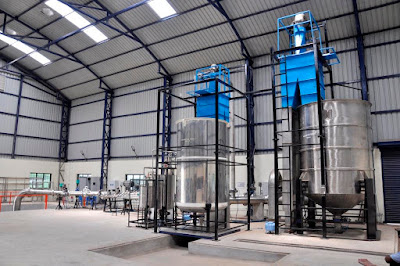
Nagman Flow has years’ experience in design, manufacture, install, testing Fully automated water meter test bench which combines DCS, DDC, and PLC process control system. With outstanding stability control, tube layout, accuracy ensurance, and facile operating interface, over 300 units of B28 VTB calibration benches have been installed across nations, not only in meter manufacturer, but also in metrology authorities. Nagman Flow has a pool of experts enabling us to customize configurations as customers’ demand. We desire to set up long term relationship with our global partners by proven of prompt and quality service.


KEY FEATURES:

  • Designed for meter size from DN15 up to DN600
  • Measure various type of flow meters
  • World Class Design
  • Fully Automatic or Semi-Automatic
  • Flow Test
  • Heat Test
  • Pressure Test
  • Pressure Difference Test
  • Pressure Resistance Test
  • RTD tests
  • Water meter calculator tests
  • PC Data Administration


WHY CHOOSE Nagman Flow Technology?

 When it comes to Test Bench for Water Meter, Nagman Flow is the one of the most excellence. And we want to explain why you should trust us when we say that choosing a Nagman Flow products equals choosing reliability. In our manufacturing plant, you will find a dedicated research and development team that gives us the ability to face your local needs and challenges head-on–regardless of size or requirements. And thanks to our in-house laboratories and highly skilled engineers, we can develop innovative and user-friendly products faster than ever. A manufacturing capacity reaching millions of units in our plant ensuring on-time delivery, and meanwhile Nagman Flow ensures the highest level of quality and reliability through standards.

Tuesday, October 12, 2021

What is Flow Meter Calibration?

A flow meter is a test device used to calculate the flow rate of process fluids and gases in industrial plants and facilities. The flow rate denotes to the speed at which a process fluid is moving through pipelines, orifices, or vessels at a given time. Control and instrumentation engineers measure this value to screen and regulate the speed and efficacy of industrial flow processes and devices.

Ideally, test devices must be ‘reset’ from time to time to stop having inaccurate readings. For example, a bathroom scale that indicates 10lbs when nobody is standing on it needs to be recalibrated to specify an initial zero value.

In industrial settings, Liquid Flow Calibration is performed to ensure that measurements are accurate permitting operations to proceed in a safe and timely manner.

What is Flow Meter Calibration?

Flow meter calibration is the procedure of comparing the pre-set scale or metering of a flow meter to a standard scale of measurement and adjusting its metering to conform to the standard. Calibration is a vital aspect of instrumentation in a broad range of industries that require high-accuracy measurements with a tiny percentage of error e.g. in Oil & Gas, Petrochemical, and manufacturing.


Flow meters are calibrated by comparing and adjusting their metering to agree with a predefined standard. Flow meter manufacturers normally calibrate their products in-house after production or send them to an independent calibration facility for adjustment.

Flow meter calibration comprises comparing the measurements of a flow meter in operation to that of a standard flow measurement device under the same conditions and regulating the scale of the flow meter to be in close agreement with the standard.

Process Flow Calibration involves calibration of a flow meter which is at present in use. Periodic recalibration is needed as flow meter readings will often go ‘out of phase’ over time due to variable conditions involved in industrial processes.

The main difference amid the two procedures is that flow calibration is done before the meter is sent out for use while recalibration is done after the flow meter has been in operation for a while. Software tools can also be used to verify the correctness of measurements after a flow meter has been calibrated.


Wednesday, June 30, 2021


Gas flow Meter calibration system is the procedure of comparing the pre-set scale or metering of a flow meter to a standard scale of measurement and altering its metering to conform to the standard. Calibration is a vital aspect of instrumentation in an extensive range of industries that require high-accuracy measurements with a minor percentage of error e.g. in Oil & Gas, Petrochemical, and manufacturing.

Gas Flow Meter Calibration System


Flow meters are calibrated by comparing and regulating their metering to correspond with a predefined standard. Flow meter manufacturers normally calibrate their products in-house after production or send them to an independent calibration facility for adjustment.

Gas Meter Calibration System includes comparing the measurements of a flow meter in operation to that of a standard flow measurement device under the same conditions and regulating the scale of the flow meter to be in close agreement with the standard.

Flow meter recalibration comprises calibration of a flow meter which is already in use. Periodic recalibration is crucial as flow meter readings will often go ‘out of phase’ over time due to variable conditions involved in industrial processes.

The main variance between the two procedures is that flow calibration is done before the meter is sent out for use while recalibration is done after the flow meter has been in operation for a while. Software tools can also be used to confirm the accuracy of measurements after a flow meter has been calibrated.


Tuesday, January 19, 2021

Ultrasonic Flow Meters From Nagmanflow

 Ultrasonic flow meters use sound waves to define the velocity of a fluid flowing in a pipe. At no flow conditions, the frequencies of an ultrasonic wave diffused into a pipe and its replications from the fluid are the same. Under flowing conditions, the frequency of the replicated wave is different due to the Doppler Effect. When the fluid moves faster, the frequency shift surges linearly. The transmitter routes signals from the transmitted wave and its reflections to regulate the flow rate.

The ultrasonic flow meters send and receive ultrasonic waves amid transducers in both the upstream and downstream ways in the pipe. At no flow circumstances, it takes the same time to travel upstream and downstream amongst the transducers. In flowing settings, the upstream wave will move gentler and take more time than the downstream wave. When the fluid moves faster, the variance between the upstream and downstream times rises.

Ultrasonic flow meters are usually applied to measure the velocity of liquids that permit ultrasonic waves to pass, such as water, molten sulfur, cryogenic liquids, and chemicals. Transit time designs are also accessible to measure gas and vapor flow. Since fluids that do not pass ultrasonic energy, such as many types of slurry, restrict the penetration of ultrasonic waves into the fluid. In ultrasonic flowmeters, opaque fluids can restrict ultrasonic wave diffusion too near the pipe wall, which can reduce accuracy and make the flowmeter to measure wrongly. The ultrasonic flowmeters can stop functioning when an opaque fluid declines the ultrasonic wave to such a level that the wave does not touch the receiver.

 Be sure that the fluid can sufficiently conduct ultrasonic waves, since the flow measurements will not quantity when the ultrasonic waves cannot pierce the flow stream between the transducers. Likewise, ultrasonic waves must be able to infiltrate the fluid for Doppler flowmeters to operate perfectly. While the fluid is moderately opaque and does not enter the fluid, the flowmeters tend to quantity the velocity of the fluid at or near the pipe wall, which can cause substantial measurement error and cause the flowmeter to fail.

Monday, December 14, 2020

Radar Level Transmitters From Nagman Flow

 The radar leveltransmitters are used for level measurements in many industrial applications. It’s very difficult to choose a radar level transmitter from the pool of options that industries need. Before making a decision to buy, you need to understand the system completely and also its technologies in detail. In Nagman we provide you a proper guidance about it in all ways possible by providing you the insights about their functioning technologies and their significance in industries in terms of the applications.


`The guided wave radar technology uses guided radar probes. They are used to detect the advancing motion of the electromagnetic waves which makes us work with the loss of signal also. They are suitable for all types of industrial environmental conditions and remain unaffected by externals factors like pressure, temperature, moisture, dust, and noise. It is highly compatible and needs zero maintenance that helps with high-end industrial applications. The guided wave radar technology is basically used for measuring liquid levels with two separate levels. The guided wave radar level transmitter doesn’t require any changes when there are changes in the dielectric strength, conductivity, or density of the fluid. They are used in fields like the mining industry, boiler engineering, aeronautics industry, bore digging industry.

 The level transmitter plays a huge role in different fields which when combined with the benefits of guided wave radar technology enhances your industry’s performance. In Nagman we provide you 24/7 customer service with the product knowledge that makes your search of equipment easier.


Saturday, November 28, 2020

Vortex Flow Meters From Nagmanflow

 The recent choice for the gas, steam flow, and liquid measurement is Vortex flow meters that are used for measuring the supersaturated and saturated steam to improve the capability and allocation in large facilities. The main applications of Vortex flow meters are volumetric water flow and high flow gas facilities. They are used in steam, liquid, and gas industrial flow applications. It uses the fluid dynamics principle of vortex shedding that helps to calculate the velocity of gases, steam, and liquids.


The Vortex works with the use of a dimensional bluff, known as a shedder bar, in which the vortices begin to form and oscillate. The natural frequency of these vortices is converted into a digital signal which is then processed through the meter’s electronics to calculate the flow. The advantages are it is accurate and for measuring the flow. This method of measurement can be used with many types of fluids, steam, and even gases. As the Vortex flow meters lack moving mechanical components makes its construction more robust that can handle the toughest application environments.


The vortex flowmeters are used in Oil Industries, water treatment plants, Pharmaceuticals, and Petrochemical industries. In Nagman we provide you with a lot of options and varieties of flow meters with good quality and we also provide you the assistance needed for the whole process for your industries with more equipment needed for your Industry.